Plasma therapy (PRP therapy)
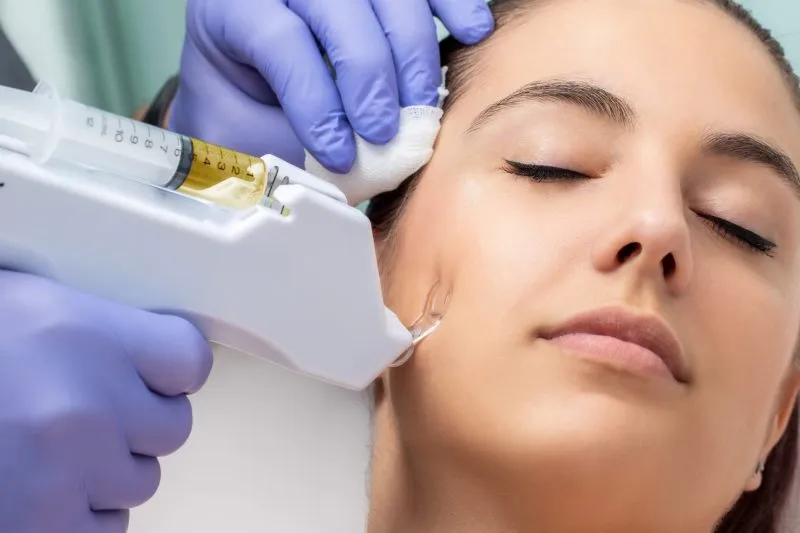
A Medical Approach to Skin and Hair Restoration
Plasmatherapy is a modern injectable treatment based on the use of autologous plasma enriched with platelets (PRP). Due to its high concentration of growth factors, PRP stimulates tissue regeneration, accelerates healing processes, and helps restore the natural condition of the skin and scalp.
Plasmatherapy (commonly known as the “vampire facial”)
This method has rightfully gained popularity among clients who wish to maintain their natural beauty and youthful appearance by activating the body’s own regeneration and rejuvenation mechanisms. Since the treatment uses only the patient’s own plasma, it completely eliminates the risk of allergic reactions or rejection.
The platelet-rich plasma (PRP) we use is not just a liquid – it's a true elixir for your skin, enriched with biologically active substances and natural growth factors (such as PDGF, TGF, VEGF, and others), which:
- Activate cellular renewal and stimulate skin cell function
- Encourage the formation of new capillaries, enhancing skin nourishment
- Boost collagen and elastin production — the essential building blocks of firm, youthful skin
- Improve microcirculation and the overall health of the skin
In aesthetic dermatology, the “vampire facial” is particularly effective for:
- Signs of aging: loss of elasticity, fine lines, and wrinkles
- Post-acne marks and atrophic scars
- Uneven pigmentation
- Dryness, dehydration, and lack of tone
- Stretch marks and various types of scarring
PRP with Hyaluronic Acid – Double Power for Youthful Skin
This treatment combines the regenerative power of your own plasma with the deep moisturizing effect of hyaluronic acid.
This synergy not only stimulates skin regeneration but also delivers intense hydration, making it ideal for dry, dehydrated, and dull skin. The result is visibly plumper, smoother, and more radiant skin.
An excellent choice if you’re looking to combine natural rejuvenation with deep hydration.
PRP Treatment for Hair Loss: A Scientifically Proven Method
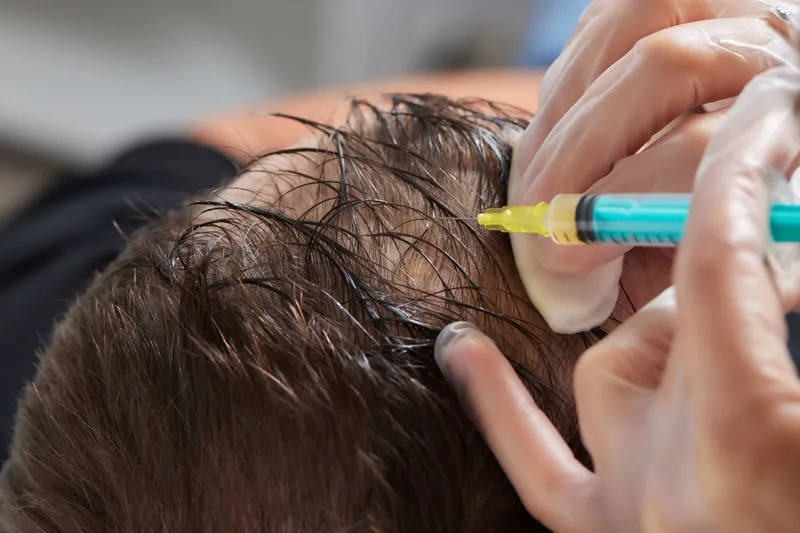
Plasmotherapy has proven to be highly effective in treating androgenetic alopecia, diffuse hair loss, and in supporting recovery after aggressive treatments such as permanent hair coloring and chemical perms.
PRP treatment supports hair growth in multiple ways:
- Stimulates hair follicles and prolongs the active growth phase (anagen)
- Improves microcirculation in the scalp, enhancing oxygen and nutrient delivery to the follicles
- Reduces inflammation and regulatory imbalances in the scalp commonly associated with hair loss
- Increases hair density and strand thickness with consistent treatment over time
PRP hair treatment is highly effective for:
- Androgenetic alopecia (hereditary hair loss) in both men and women
- Diffuse hair loss caused by factors like stress, anemia, pregnancy, or surgery
- Seasonal hair shedding
- Seborrheic dermatitis accompanied by hair thinning
- Post-operative recovery after hair transplantation
Your Questions, Our Answers
PRP treatment involves a few simple steps:
- Blood collection: A nurse carefully draws a small amount of blood—typically 10–20 ml.
- Centrifugation: The blood is processed in a specialized centrifuge, where it is separated into layers. The platelet-rich plasma is then extracted, containing a high concentration of growth factors and other beneficial components.
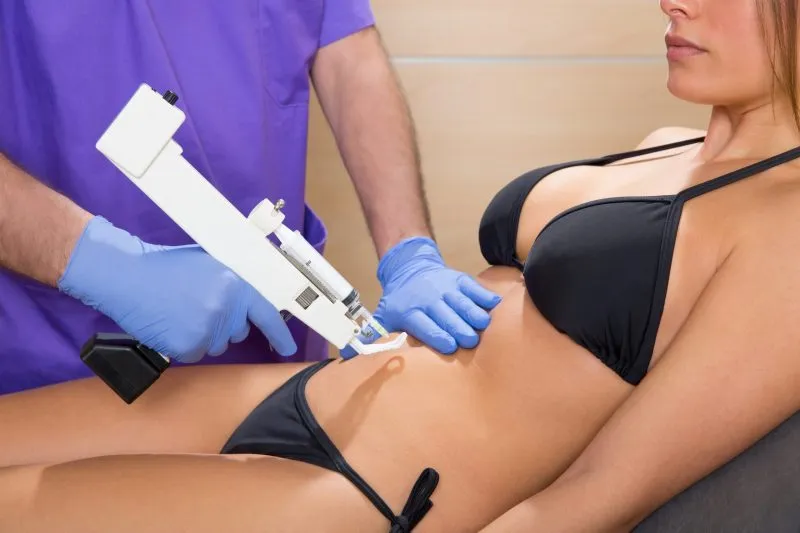
- Plasma injection: The prepared plasma, rich in biologically active substances, is injected into targeted areas of the scalp or facial skin using precise microinjections.
The entire procedure typically takes 30–40 minutes and does not require special preparation.
Before the procedure, we always conduct a personal consultation to make sure that PRP therapy is both safe and the right choice for your individual needs.
A typical scalp treatment plan includes 3 to 6 sessions, spaced 2 to 3 weeks apart. After completing the initial course, maintenance treatments are recommended every 4 to 6 months. Visible results usually begin within 4 to 6 weeks and continue to improve over time.
Since every scalp and hair condition is unique, our specialist will create a personalized plan and recommend the optimal number and frequency of sessions based on your goals and needs.
Plasma therapy does not produce immediate results—the effect develops gradually. However, after just 2 sessions, many patients begin to notice:
- Reduced hair shedding and improved texture and shine
- Increased hair density and thickness
- Stimulation of new hair growth, including in dormant follicles
- For facial treatments: brighter skin tone, improved elasticity, and a visible reduction in wrinkles and post-acne marks
The full effect typically develops within 4 to 8 weeks and may last for 6 to 12 months.
PRP therapy is suitable for both adults and younger patients, including both men and women. It is generally recommended from the age of 18. In certain cases, such as severe hair loss or persistent acne in adolescents, the procedure may be considered earlier, following an in-person medical consultation and with parental consent.
PRP Treatment Is Not Recommended in the Following Cases:
- Cancer (current or past diagnosis)
- Severe anemia or thrombocytopenia
- Autoimmune diseases in an active phase
- Active inflammation or skin infections at the injection site
- Pregnancy or breastfeeding
- Blood clotting disorders or use of anticoagulant medications
Yes. PRP therapy is often combined with other procedures such as mesotherapy, laser treatments, minoxidil application, or hair transplantation to enhance results and accelerate visible improvement.
We typically recommend a course of 3 to 6 sessions, spaced 2 to 3 weeks apart. To maintain the results, follow-up treatments are advised every 4 to 6 months.
Yes. PRP therapy is a very safe procedure. Since it uses your own blood, there is no risk of allergic reactions or rejection. All treatments are carried out under strict sterile conditions, and any side effects—such are usually minimal and temporary.
No special recovery is required after the session—you can return to your normal daily activities immediately. Minor redness or swelling at the injection sites may occur, but these typically subside within a few hours.
To support the best possible results, we recommend not washing your hair on the day of the treatment to maintain sterility in the treated area. For the next few days, avoid using exfoliating products or scrubs on the scalp, brushing with stiff-bristled brushes, and performing any scalp massages.
After a hair transplant, it’s important not only to preserve the results but also to support the newly implanted follicles in rooting successfully and growing more quickly. For this purpose, it is recommended using platelet-rich plasma. The plasma is injected into the transplant area, where it acts as a natural recovery booster—no chemicals, no risk of allergic reactions.
- Accelerates the engraftment of transplanted hair follicles
- Stimulates the growth of new hair
- Reduces inflammation and lowers the risk of complications
- Strengthens both transplanted and existing hair
- Improves the overall condition of the scalp
The result is smoother, denser, and more natural-looking hair growth during the first few months following the transplantation.
The optimal time to begin PRP therapy is 2 to 4 weeks after the hair transplant. During this period, PRP helps improve follicle engraftment and speeds up the healing of the scalp.
Yes, PRP therapy is optional. However, without its supportive benefits, recovery may take longer, and some transplanted follicles might not anchor as effectively. To maximize healing and long-term results, we recommend including PRP as part of your post-transplant care.
PRP is a natural, scientifically proven treatment with no side effects or hormonal disruption.
Book a consultation to discuss your personalized hair and scalp restoration plan with our specialist.
Last reviewed by Larissa Koivuniemi, Medical Director at MESQ AESTHETICS: 29 July 2026.
'%3e%3cpath%20d='M19.906%200H6.094A6.094%206.094%200%200%200%200%206.094v13.812A6.094%206.094%200%200%200%206.094%2026h13.812A6.094%206.094%200%200%200%2026%2019.906V6.094A6.094%206.094%200%200%200%2019.906%200z'%20fill='url(%23b)'/%3e%3cpath%20d='M19.906%200H6.094A6.094%206.094%200%200%200%200%206.094v13.812A6.094%206.094%200%200%200%206.094%2026h13.812A6.094%206.094%200%200%200%2026%2019.906V6.094A6.094%206.094%200%200%200%2019.906%200z'%20fill='url(%23c)'/%3e%3cpath%20d='M13%202.844c-2.757%200-3.104.012-4.187.061-1.081.05-1.82.22-2.465.472A4.973%204.973%200%200%200%204.55%204.548a4.985%204.985%200%200%200-1.172%201.8c-.252.645-.423%201.383-.472%202.464-.049%201.083-.061%201.43-.061%204.188s.012%203.104.061%204.187c.05%201.081.221%201.82.472%202.465.26.668.607%201.235%201.171%201.799a4.972%204.972%200%200%200%201.799%201.172c.646.251%201.384.422%202.465.472%201.084.05%201.43.062%204.188.062s3.103-.013%204.187-.062c1.08-.05%201.82-.22%202.466-.472a4.967%204.967%200%200%200%201.798-1.172%204.985%204.985%200%200%200%201.172-1.799c.25-.646.421-1.384.472-2.465.049-1.083.061-1.429.061-4.187s-.012-3.104-.061-4.188c-.05-1.081-.222-1.819-.472-2.465a4.985%204.985%200%200%200-1.172-1.799%204.962%204.962%200%200%200-1.799-1.171c-.647-.251-1.386-.422-2.467-.472-1.083-.05-1.428-.061-4.187-.061H13zm-.91%201.83H13c2.713%200%203.034.01%204.105.058.99.046%201.528.211%201.886.35.474.184.812.404%201.167.76.355.355.575.694.76%201.168.139.357.305.895.35%201.885.048%201.07.059%201.392.059%204.103%200%202.71-.01%203.032-.06%204.103-.045.99-.21%201.527-.35%201.885a3.138%203.138%200%200%201-.76%201.166%203.14%203.14%200%200%201-1.166.76c-.358.14-.896.305-1.886.35-1.07.049-1.392.06-4.104.06s-3.033-.011-4.104-.06c-.99-.046-1.528-.211-1.886-.35a3.146%203.146%200%200%201-1.168-.76%203.147%203.147%200%200%201-.76-1.167c-.139-.358-.305-.895-.35-1.885-.048-1.071-.058-1.393-.058-4.105%200-2.712.01-3.032.058-4.102.046-.99.211-1.528.35-1.886.184-.474.405-.813.76-1.168a3.15%203.15%200%200%201%201.168-.76c.358-.14.896-.305%201.886-.35.937-.043%201.3-.055%203.193-.058v.003zm6.332%201.686a1.219%201.219%200%201%200%200%202.438%201.219%201.219%200%200%200%200-2.438zm-5.421%201.424a5.216%205.216%200%201%200%200%2010.432%205.216%205.216%200%200%200%200-10.432zm0%201.83a3.385%203.385%200%201%201%200%206.771%203.385%203.385%200%200%201%200-6.77z'%20fill='%23fff'/%3e%3c/g%3e%3cdefs%3e%3cradialGradient%20id='b'%20cx='0'%20cy='0'%20r='1'%20gradientUnits='userSpaceOnUse'%20gradientTransform='matrix(0%20-25.7679%2023.9662%200%206.906%2028.003)'%3e%3cstop%20stop-color='%23FD5'/%3e%3cstop%20offset='.1'%20stop-color='%23FD5'/%3e%3cstop%20offset='.5'%20stop-color='%23FF543E'/%3e%3cstop%20offset='1'%20stop-color='%23C837AB'/%3e%3c/radialGradient%3e%3cradialGradient%20id='c'%20cx='0'%20cy='0'%20r='1'%20gradientUnits='userSpaceOnUse'%20gradientTransform='matrix(2.26073%2011.29436%20-46.55571%209.3188%20-4.355%201.873)'%3e%3cstop%20stop-color='%233771C8'/%3e%3cstop%20offset='.128'%20stop-color='%233771C8'/%3e%3cstop%20offset='1'%20stop-color='%2360F'%20stop-opacity='0'/%3e%3c/radialGradient%3e%3cclipPath%20id='a'%3e%3cpath%20fill='%23fff'%20d='M0%200h26v26H0z'/%3e%3c/clipPath%3e%3c/defs%3e%3c/svg%3e)
'%3e%3cpath%20d='M26%2013c0-7.18-5.82-13-13-13S0%205.82%200%2013c0%206.489%204.754%2011.867%2010.969%2012.842v-9.084H7.668V13h3.3v-2.864c0-3.258%201.942-5.058%204.911-5.058%201.422%200%202.91.254%202.91.254v3.2h-1.64c-1.614%200-2.118%201.001-2.118%202.03V13h3.606l-.577%203.758h-3.029v9.084C21.246%2024.867%2026%2019.49%2026%2013z'%20fill='%231877F2'/%3e%3cpath%20d='M18.06%2016.758L18.637%2013H15.03v-2.438c0-1.029.504-2.03%202.119-2.03h1.64v-3.2s-1.489-.254-2.911-.254c-2.97%200-4.91%201.8-4.91%205.058V13H7.668v3.758h3.3v9.084a13.094%2013.094%200%200%200%204.063%200v-9.084h3.03z'%20fill='%23fff'/%3e%3c/g%3e%3cdefs%3e%3cclipPath%20id='a'%3e%3cpath%20fill='%23fff'%20d='M0%200h26v26H0z'/%3e%3c/clipPath%3e%3c/defs%3e%3c/svg%3e)