Lymphastim: Less Swelling, Lighter Legs
Pressotherapy to stimulate the lymphatic and circulatory systems
First treatment – €74
Lighter legs and freedom of movement without swelling or heaviness

Heaviness, tension and swelling in the legs can significantly affect daily life, recovery and mobility. BTL‑6000 Lymphastim is used to stimulate lymphatic and venous circulation. The treatment promotes intensive fluid drainage from the tissues and increases blood flow to the tissues. The pressure, programme and treatment duration are selected based on your health, goals and any potential contraindications.
What is Lymphastim used for?
Relief from heavy legs and reduction of swelling
Support for recovery after physical activity or injury
Support and restoration of joint mobility, including in cases of osteoarthritis
Anti-cellulite effect
Reduction of body circumference and body contouring
Improved skin elasticity and nourishment
Tissue regeneration and detoxification
Post-liposuction care
Prevention of varicose veins and varicose vein thrombosis
To reduce swelling in the arms and support lymphatic circulation
How Lymphastim works
During the treatment, you will feel rhythmic compression. The pressure should remain comfortable and can be adjusted during the treatment according to how it feels.
The applicator is placed over the treatment area.
Twelve air chambers inflate sequentially and in a controlled manner.
The travelling pressure wave helps move blood and lymph through the tissues.
The specialist adjusts the treatment area and pressure individually.
Treatment areas at MESQ
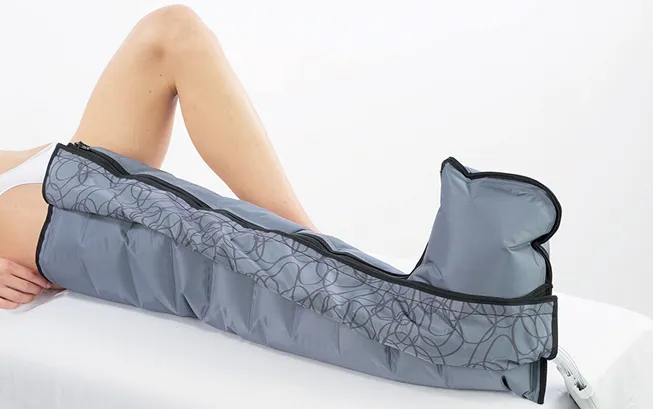
Legs
The leg applicators provide sequential compression from the ankles upwards. This option is particularly suitable when the aim is to promote a feeling of lightness in the legs, support recovery and manage swelling.
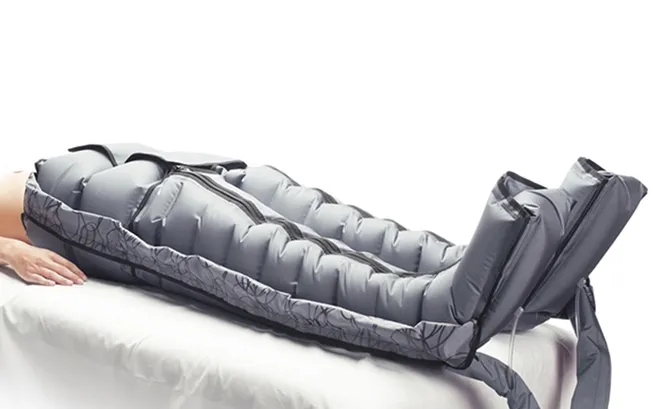
Lower body
The trouser-shaped applicator covers the legs and pelvic area. The specialist selects the appropriate applicator based on your goals and health.
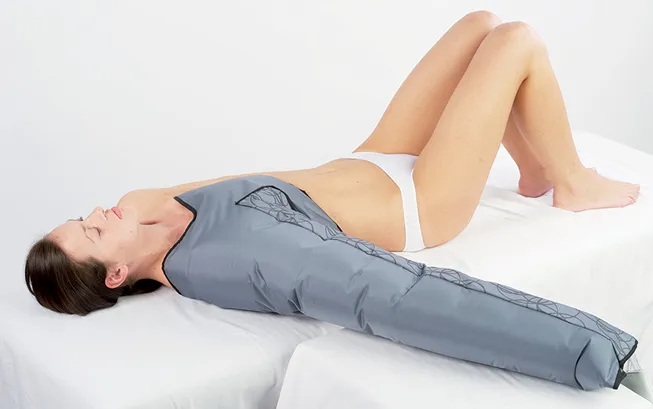
Arms
The arm applicator helps reduce swelling and supports lymphatic and blood circulation. The treatment may also support recovery after an injury or procedure when its suitability has been assessed individually.
Who may benefit from the treatment?
Lymphastim may be suitable for both women and men experiencing swelling, heaviness or tightness in the arms or legs. The treatment has a powerful pain- and swelling-relieving effect. It also stimulates local metabolism and promotes tissue regeneration. A suitable treatment protocol is always determined before the first session.
The method is supported by scientific evidence
Intermittent pneumatic compression (IPC) has been studied in medicine for decades. Research suggests that IPC may complement the comprehensive management of oedema in certain patient groups.
Clinical study: circumference reduced by up to 2.2 cm in four weeks*
The BTL‑6000 Lymphastim was investigated in a pilot randomised university-based study conducted in the country. The participants had type 2 diabetes and lower-limb lymphoedema. The active group received manual lymphatic drainage therapy and Lymphastim treatments three times a week for four weeks.
Study figures
What was measured
12 chambers
Sequential compression therapy
4 weeks
Duration of the study period
up to 2.2 cm
Average reduction in lower-leg circumference measured below the knee
+6.5°
Average improvement in hip flexion range of motion
30 participants
Randomized pilot study
*The results were achieved as part of a comprehensive programme that included manual lymphatic drainage therapy and BTL‑6000 Lymphastim. Individual results may vary, and the study findings do not mean that a similar effect will be achieved after a single treatment.
What did the study show?
After four weeks, the mean circumference of the lower limb in the active group had decreased by 1,3–2,2 cm at different measurement levels:
Measurement level
Before
After four weeks
Change
Ankle
26,0 сm
23,9 сm
-2,1 сm
Knee
42,0 сm
39,8 сm
-2,2 сm
10 cm above the knee
50,6 сm
48,9 сm
-1,7 сm
Groin
63,3 сm
62 сm
-1,3 сm
In terms of mobility, mean improvements of +6.5° in hip flexion, +5.8° in knee flexion and +3.6° in ankle dorsiflexion were reported. All 30 participants completed the programme, and no serious adverse events were recorded during the study.
Source: de Sire A. et al. Effects of Intermittent Pneumatic Compression on Lower Limb Lymphedema in Patients with Type 2 Diabetes Mellitus. Medicina. 2021;57:1018
Frequently asked questions
The applicator chambers inflate one after another, so the treatment feels like rhythmic compression that progresses sequentially along the treatment area. The pressure is adjusted to a comfortable level.
No. You can usually return to your normal daily activities after the treatment.
The number of treatments depends on your starting condition and goals. The specialist prepares an individual plan based on an assessment. The 12-treatment programme used in the study is not an automatic recommendation for every client.
The treatment is used to reduce swelling in the arms and support lymphatic and blood circulation. It may also be suitable for supporting recovery after an injury or procedure. The suitability of the treatment is always assessed individually.
Yes. The treatment is not performed, for example, in cases of suspected acute venous thrombosis or thrombophlebitis, decompensated cardiovascular disease, acute pulmonary oedema, fever or an active infectious disease. Other medical conditions, pregnancy, implants and current medications are also assessed before the treatment. Always tell the specialist openly about your health.
No. New, one-sided, painful, or rapidly increasing swelling must be assessed by a healthcare professional before pressotherapy.
Take the first step towards lighter legs
Book your first Lymphastim treatment for €74.
We will assess your health and select the most suitable treatment option for you.
The content was last reviewed by Larissa Koivuniemi, the physician in charge at MESQ AESTHETICS, on 17.08.2026.
'%3e%3cpath%20d='M19.906%200H6.094A6.094%206.094%200%200%200%200%206.094v13.812A6.094%206.094%200%200%200%206.094%2026h13.812A6.094%206.094%200%200%200%2026%2019.906V6.094A6.094%206.094%200%200%200%2019.906%200z'%20fill='url(%23b)'/%3e%3cpath%20d='M19.906%200H6.094A6.094%206.094%200%200%200%200%206.094v13.812A6.094%206.094%200%200%200%206.094%2026h13.812A6.094%206.094%200%200%200%2026%2019.906V6.094A6.094%206.094%200%200%200%2019.906%200z'%20fill='url(%23c)'/%3e%3cpath%20d='M13%202.844c-2.757%200-3.104.012-4.187.061-1.081.05-1.82.22-2.465.472A4.973%204.973%200%200%200%204.55%204.548a4.985%204.985%200%200%200-1.172%201.8c-.252.645-.423%201.383-.472%202.464-.049%201.083-.061%201.43-.061%204.188s.012%203.104.061%204.187c.05%201.081.221%201.82.472%202.465.26.668.607%201.235%201.171%201.799a4.972%204.972%200%200%200%201.799%201.172c.646.251%201.384.422%202.465.472%201.084.05%201.43.062%204.188.062s3.103-.013%204.187-.062c1.08-.05%201.82-.22%202.466-.472a4.967%204.967%200%200%200%201.798-1.172%204.985%204.985%200%200%200%201.172-1.799c.25-.646.421-1.384.472-2.465.049-1.083.061-1.429.061-4.187s-.012-3.104-.061-4.188c-.05-1.081-.222-1.819-.472-2.465a4.985%204.985%200%200%200-1.172-1.799%204.962%204.962%200%200%200-1.799-1.171c-.647-.251-1.386-.422-2.467-.472-1.083-.05-1.428-.061-4.187-.061H13zm-.91%201.83H13c2.713%200%203.034.01%204.105.058.99.046%201.528.211%201.886.35.474.184.812.404%201.167.76.355.355.575.694.76%201.168.139.357.305.895.35%201.885.048%201.07.059%201.392.059%204.103%200%202.71-.01%203.032-.06%204.103-.045.99-.21%201.527-.35%201.885a3.138%203.138%200%200%201-.76%201.166%203.14%203.14%200%200%201-1.166.76c-.358.14-.896.305-1.886.35-1.07.049-1.392.06-4.104.06s-3.033-.011-4.104-.06c-.99-.046-1.528-.211-1.886-.35a3.146%203.146%200%200%201-1.168-.76%203.147%203.147%200%200%201-.76-1.167c-.139-.358-.305-.895-.35-1.885-.048-1.071-.058-1.393-.058-4.105%200-2.712.01-3.032.058-4.102.046-.99.211-1.528.35-1.886.184-.474.405-.813.76-1.168a3.15%203.15%200%200%201%201.168-.76c.358-.14.896-.305%201.886-.35.937-.043%201.3-.055%203.193-.058v.003zm6.332%201.686a1.219%201.219%200%201%200%200%202.438%201.219%201.219%200%200%200%200-2.438zm-5.421%201.424a5.216%205.216%200%201%200%200%2010.432%205.216%205.216%200%200%200%200-10.432zm0%201.83a3.385%203.385%200%201%201%200%206.771%203.385%203.385%200%200%201%200-6.77z'%20fill='%23fff'/%3e%3c/g%3e%3cdefs%3e%3cradialGradient%20id='b'%20cx='0'%20cy='0'%20r='1'%20gradientUnits='userSpaceOnUse'%20gradientTransform='matrix(0%20-25.7679%2023.9662%200%206.906%2028.003)'%3e%3cstop%20stop-color='%23FD5'/%3e%3cstop%20offset='.1'%20stop-color='%23FD5'/%3e%3cstop%20offset='.5'%20stop-color='%23FF543E'/%3e%3cstop%20offset='1'%20stop-color='%23C837AB'/%3e%3c/radialGradient%3e%3cradialGradient%20id='c'%20cx='0'%20cy='0'%20r='1'%20gradientUnits='userSpaceOnUse'%20gradientTransform='matrix(2.26073%2011.29436%20-46.55571%209.3188%20-4.355%201.873)'%3e%3cstop%20stop-color='%233771C8'/%3e%3cstop%20offset='.128'%20stop-color='%233771C8'/%3e%3cstop%20offset='1'%20stop-color='%2360F'%20stop-opacity='0'/%3e%3c/radialGradient%3e%3cclipPath%20id='a'%3e%3cpath%20fill='%23fff'%20d='M0%200h26v26H0z'/%3e%3c/clipPath%3e%3c/defs%3e%3c/svg%3e)
'%3e%3cpath%20d='M26%2013c0-7.18-5.82-13-13-13S0%205.82%200%2013c0%206.489%204.754%2011.867%2010.969%2012.842v-9.084H7.668V13h3.3v-2.864c0-3.258%201.942-5.058%204.911-5.058%201.422%200%202.91.254%202.91.254v3.2h-1.64c-1.614%200-2.118%201.001-2.118%202.03V13h3.606l-.577%203.758h-3.029v9.084C21.246%2024.867%2026%2019.49%2026%2013z'%20fill='%231877F2'/%3e%3cpath%20d='M18.06%2016.758L18.637%2013H15.03v-2.438c0-1.029.504-2.03%202.119-2.03h1.64v-3.2s-1.489-.254-2.911-.254c-2.97%200-4.91%201.8-4.91%205.058V13H7.668v3.758h3.3v9.084a13.094%2013.094%200%200%200%204.063%200v-9.084h3.03z'%20fill='%23fff'/%3e%3c/g%3e%3cdefs%3e%3cclipPath%20id='a'%3e%3cpath%20fill='%23fff'%20d='M0%200h26v26H0z'/%3e%3c/clipPath%3e%3c/defs%3e%3c/svg%3e)