Acne and Acne Scars – How to Get Rid of Them
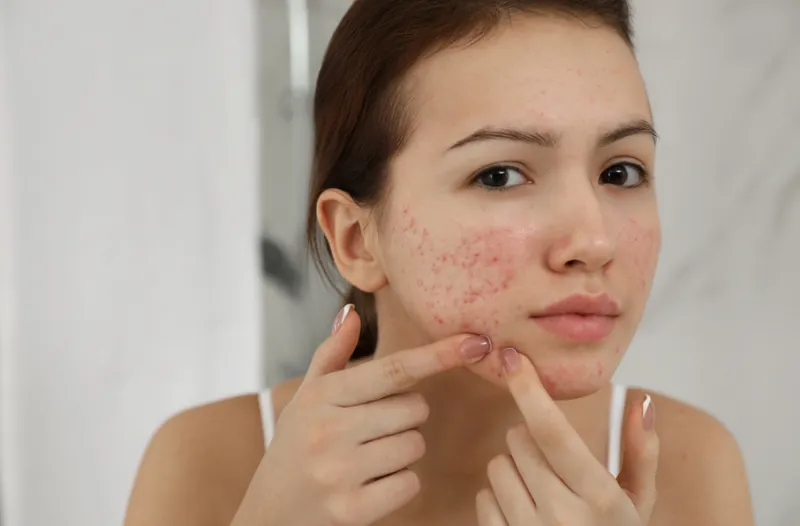
Acne is one of the most common skin conditions, yet many people struggle with it for years without lasting results. Search queries like “how to get rid of acne,” “how to remove pimples,” and “how to get rid of acne scars” all point to one thing: people want an effective solution.
In reality, acne and acne scars are two different conditions. Even when active acne subsides, visible marks such as red post-acne spots or deeper indented scars may remain.
What is acne and what causes it?
Acne is a skin condition that develops when:
- sebum production increases
- pores become clogged
- bacteria multiply
- inflammation develops
Acne is not a single uniform condition, but can appear in several different forms. The most common types include:
- Comedonal acne (mild acne), with blackheads and whiteheads and minimal inflammation
- Inflammatory acne (acne vulgaris), with red pimples and pus-filled breakouts
- Cystic or nodular acne (severe acne), where inflammation occurs deep within the skin and may lead to painful nodules and acne scars
- Severe forms such as acne conglobata, which are rarer but often require medical treatment
The type of acne directly affects which treatment or medication will be most effective. Acne can also appear on areas beyond the face, such as the back, shoulders, and chest.
How is acne treated properly?
Acne treatment depends on its type and severity. In many cases, treatment begins with proper skincare, but medical evaluation is often needed.
Skincare
The foundation of acne-prone skin care is maintaining balance:
- lightweight moisturizers suitable for acne-prone skin
- gentle cleansing
- non-comedogenic products
Professionally selected products can help reduce impurities and calm the skin.
Medical treatment
In more complex cases—especially moderate, severe, or cystic acne—an in-person consultation with a doctor is often required.
Depending on the clinical situation, treatment options may include:
- topical (external) medications
- oral acne medications
- hormonal therapy when indicated
When to see a professional
It is recommended to seek professional advice if acne persists or worsens, leaves acne scars or pigmentation or does not respond to home care.
Why does acne leave scars?
Many people notice that even after acne clears, the skin does not fully return to normal. This leads to the question: what helps with acne scars and how can they actually be removed?
Acne scars form when inflammation penetrates deeper layers of the skin and damages its structure. The more severe and deeper the inflammation, the higher the risk of permanent changes.
Scars can appear in different forms:
- red acne marks, often post-inflammatory discoloration
- atrophic (indented) scars, where the skin surface becomes uneven
- in rarer cases, raised scars such as keloids
For this reason, creams alone are usually not enough when structural changes are present. Treatments must target deeper skin layers and support skin regeneration.
How to get rid of acne scars?
When the goal is to get rid of acne scars, more advanced aesthetic treatments are often required.
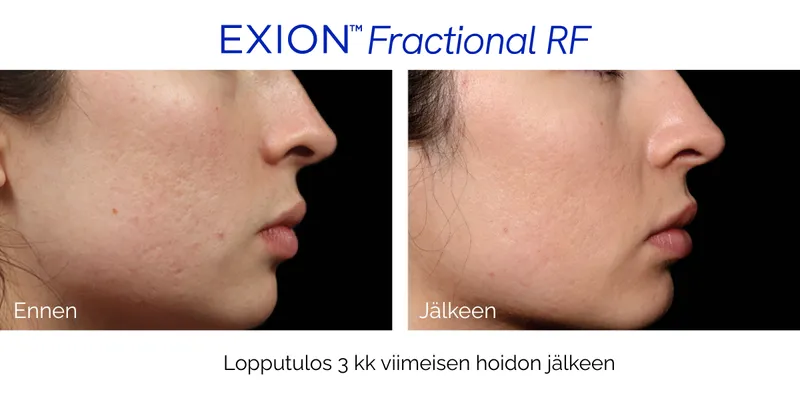
EXION RF Microneedling for acne scars
EXION RF Microneedling is an advanced treatment that combines fractional RF technology with skin regeneration.
The treatment:
- stimulates collagen production
- improves skin structure
- helps reduce acne and other scars
- smooths indented acne scars
Unlike traditional microneedling, EXION RF Microneedling works in deeper layers of the skin, making it effective even for more severe scarring.
How does EXION RF Microneedling work?
EXION RF Microneedling creates controlled micro-injuries in the skin using RF energy, triggering the skin’s natural renewal process.
As a result, the skin becomes firmer, scars are reduced, and the skin texture is smoothed.
After treatment, the skin may appear slightly red, but recovery is typically quick.
Laser treatments and modern alternatives
Laser treatments for acne scars target deeper skin layers and are especially suitable for more pronounced scarring.
However, more advanced technologies are now available. For example, EXION Clear RF uses an innovative applicator to deliver RF energy through micro-ablation.
This treatment:
- gently removes damaged outer skin layers
- stimulates natural cell renewal
- improves skin texture
- helps reduce acne scars
As a result, acne scar treatment can be performed effectively while supporting natural and controlled skin regeneration.
Back acne – common but often overlooked
Back acne, pimples on the back, and adult acne on the back are common concerns.
Treatment may require both proper skincare and professional treatments. The skin on the back is thicker, which means results may take longer to achieve.
How quickly can acne and scars be treated?
Many people look for quick fixes, such as “how to get rid of pimples fast” or “how to remove acne scars quickly.” In reality, skin changes do not happen overnight.
Active acne can improve relatively quickly with proper treatment, but it requires consistency. Acne scars, on the other hand, are structural skin changes and always require a gradual approach.
The deeper the scar, the longer the regeneration process. This is why treatments are typically done in a series.
With the right approach, however, significant improvements can be achieved—and it is possible to reduce acne scars and improve overall skin quality.
Acne and acne scars are different problems
The most important thing to understand – acne and acne scars are not the same.
Acne = active inflammation.
Scars = the after-effects of acne, visible as scarring, pigmentation, and uneven skin texture.
This is why treatment approaches must differ.
When should you seek treatment?
If acne persists, worsens over time, or has already caused visible scarring, home care alone may not be enough.
In particular, in cases of severe or cystic acne, or when the skin does not respond to self-care, it is beneficial to consult a specialist.
During a consultation, the skin’s condition is assessed comprehensively, and a personalized treatment plan is created to support skin regeneration and effectively reduce acne scars.
FAQ – Acne and Acne Scars
How can I get rid of acne?
Treatment depends on severity. Mild acne can often be managed with proper skincare, while more severe cases may require medication or professional treatments.
How can I get rid of pimples quickly?
It’s important to understand that pimples and acne are not the same. A single pimple may resolve quickly, but acne usually requires a structured treatment plan.
What helps with acne scars?
Effective treatments include EXION RF Microneedling and Clear RF. Fractional RF stimulates collagen and improves skin structure, while Clear RF renews the skin surface.
Does microneedling work for acne scars?
Yes. EXION RF Microneedling stimulates collagen production and improves skin texture.
How often should microneedling be done?
It depends on the condition of the skin. EXION RF Microneedling treatments are typically performed every 1–4 weeks, with maintenance treatments every 6–12 months.
Can acne appear on the back?
Yes. Back acne is common and should be treated similarly to facial acne.
How long do acne scars last?
Without treatment, scars can be permanent. However, with the right treatments, they can be significantly reduced.
'%3e%3cpath%20d='M19.906%200H6.094A6.094%206.094%200%200%200%200%206.094v13.812A6.094%206.094%200%200%200%206.094%2026h13.812A6.094%206.094%200%200%200%2026%2019.906V6.094A6.094%206.094%200%200%200%2019.906%200z'%20fill='url(%23b)'/%3e%3cpath%20d='M19.906%200H6.094A6.094%206.094%200%200%200%200%206.094v13.812A6.094%206.094%200%200%200%206.094%2026h13.812A6.094%206.094%200%200%200%2026%2019.906V6.094A6.094%206.094%200%200%200%2019.906%200z'%20fill='url(%23c)'/%3e%3cpath%20d='M13%202.844c-2.757%200-3.104.012-4.187.061-1.081.05-1.82.22-2.465.472A4.973%204.973%200%200%200%204.55%204.548a4.985%204.985%200%200%200-1.172%201.8c-.252.645-.423%201.383-.472%202.464-.049%201.083-.061%201.43-.061%204.188s.012%203.104.061%204.187c.05%201.081.221%201.82.472%202.465.26.668.607%201.235%201.171%201.799a4.972%204.972%200%200%200%201.799%201.172c.646.251%201.384.422%202.465.472%201.084.05%201.43.062%204.188.062s3.103-.013%204.187-.062c1.08-.05%201.82-.22%202.466-.472a4.967%204.967%200%200%200%201.798-1.172%204.985%204.985%200%200%200%201.172-1.799c.25-.646.421-1.384.472-2.465.049-1.083.061-1.429.061-4.187s-.012-3.104-.061-4.188c-.05-1.081-.222-1.819-.472-2.465a4.985%204.985%200%200%200-1.172-1.799%204.962%204.962%200%200%200-1.799-1.171c-.647-.251-1.386-.422-2.467-.472-1.083-.05-1.428-.061-4.187-.061H13zm-.91%201.83H13c2.713%200%203.034.01%204.105.058.99.046%201.528.211%201.886.35.474.184.812.404%201.167.76.355.355.575.694.76%201.168.139.357.305.895.35%201.885.048%201.07.059%201.392.059%204.103%200%202.71-.01%203.032-.06%204.103-.045.99-.21%201.527-.35%201.885a3.138%203.138%200%200%201-.76%201.166%203.14%203.14%200%200%201-1.166.76c-.358.14-.896.305-1.886.35-1.07.049-1.392.06-4.104.06s-3.033-.011-4.104-.06c-.99-.046-1.528-.211-1.886-.35a3.146%203.146%200%200%201-1.168-.76%203.147%203.147%200%200%201-.76-1.167c-.139-.358-.305-.895-.35-1.885-.048-1.071-.058-1.393-.058-4.105%200-2.712.01-3.032.058-4.102.046-.99.211-1.528.35-1.886.184-.474.405-.813.76-1.168a3.15%203.15%200%200%201%201.168-.76c.358-.14.896-.305%201.886-.35.937-.043%201.3-.055%203.193-.058v.003zm6.332%201.686a1.219%201.219%200%201%200%200%202.438%201.219%201.219%200%200%200%200-2.438zm-5.421%201.424a5.216%205.216%200%201%200%200%2010.432%205.216%205.216%200%200%200%200-10.432zm0%201.83a3.385%203.385%200%201%201%200%206.771%203.385%203.385%200%200%201%200-6.77z'%20fill='%23fff'/%3e%3c/g%3e%3cdefs%3e%3cradialGradient%20id='b'%20cx='0'%20cy='0'%20r='1'%20gradientUnits='userSpaceOnUse'%20gradientTransform='matrix(0%20-25.7679%2023.9662%200%206.906%2028.003)'%3e%3cstop%20stop-color='%23FD5'/%3e%3cstop%20offset='.1'%20stop-color='%23FD5'/%3e%3cstop%20offset='.5'%20stop-color='%23FF543E'/%3e%3cstop%20offset='1'%20stop-color='%23C837AB'/%3e%3c/radialGradient%3e%3cradialGradient%20id='c'%20cx='0'%20cy='0'%20r='1'%20gradientUnits='userSpaceOnUse'%20gradientTransform='matrix(2.26073%2011.29436%20-46.55571%209.3188%20-4.355%201.873)'%3e%3cstop%20stop-color='%233771C8'/%3e%3cstop%20offset='.128'%20stop-color='%233771C8'/%3e%3cstop%20offset='1'%20stop-color='%2360F'%20stop-opacity='0'/%3e%3c/radialGradient%3e%3cclipPath%20id='a'%3e%3cpath%20fill='%23fff'%20d='M0%200h26v26H0z'/%3e%3c/clipPath%3e%3c/defs%3e%3c/svg%3e)
'%3e%3cpath%20d='M26%2013c0-7.18-5.82-13-13-13S0%205.82%200%2013c0%206.489%204.754%2011.867%2010.969%2012.842v-9.084H7.668V13h3.3v-2.864c0-3.258%201.942-5.058%204.911-5.058%201.422%200%202.91.254%202.91.254v3.2h-1.64c-1.614%200-2.118%201.001-2.118%202.03V13h3.606l-.577%203.758h-3.029v9.084C21.246%2024.867%2026%2019.49%2026%2013z'%20fill='%231877F2'/%3e%3cpath%20d='M18.06%2016.758L18.637%2013H15.03v-2.438c0-1.029.504-2.03%202.119-2.03h1.64v-3.2s-1.489-.254-2.911-.254c-2.97%200-4.91%201.8-4.91%205.058V13H7.668v3.758h3.3v9.084a13.094%2013.094%200%200%200%204.063%200v-9.084h3.03z'%20fill='%23fff'/%3e%3c/g%3e%3cdefs%3e%3cclipPath%20id='a'%3e%3cpath%20fill='%23fff'%20d='M0%200h26v26H0z'/%3e%3c/clipPath%3e%3c/defs%3e%3c/svg%3e)